
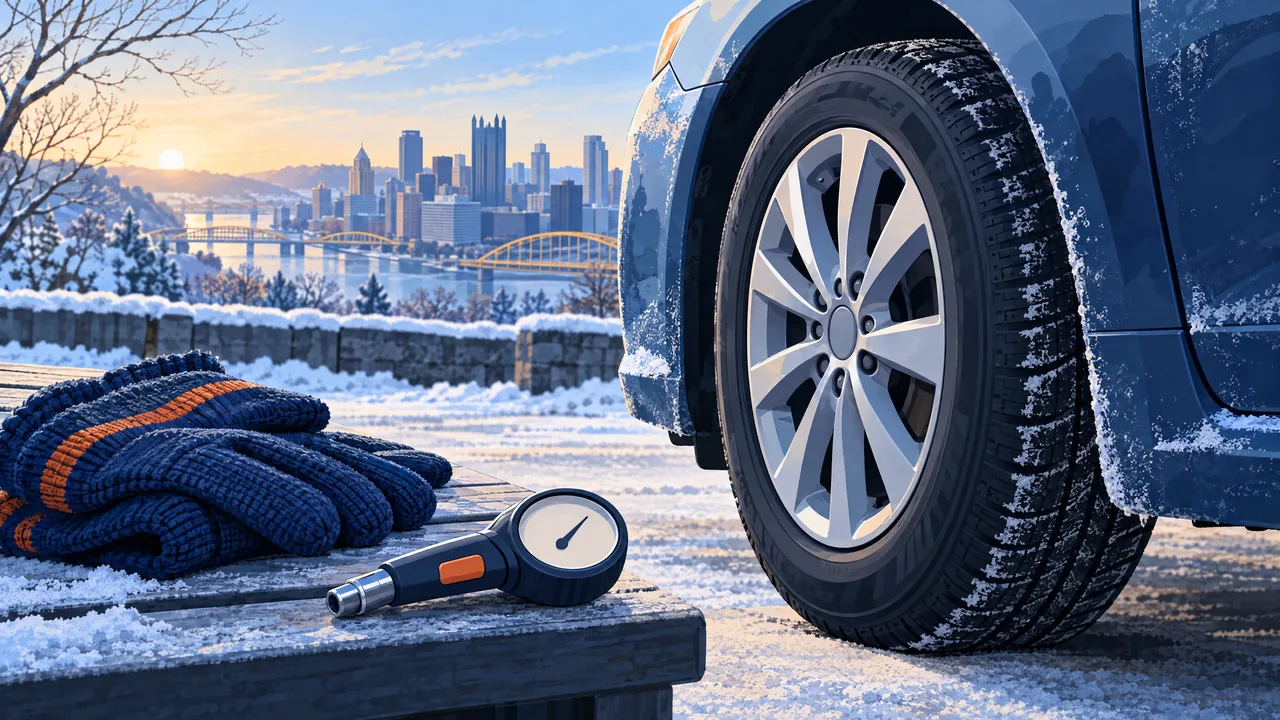
Cold-Weather Tire-Pressure Checks Before Pittsburgh Winter Driving
Before a winter drive around Pittsburgh, check tire pressure while the vehicle is still parked, rather than waiting for a dashboard warning. The National Highway Traffic Safety Administration (NHTSA) explains that tire inflation pressure falls as outside temperature drops. That makes a cold-weather check useful even when a tire looks normal.
Start with your vehicle's pressure specification and an accurate gauge. A tire-pressure monitoring system, or TPMS, does not replace that check.
Use the vehicle placard, not the sidewall maximum
Find the Tire and Loading Information Label on the driver's door edge or doorjamb, or check the owner's manual. Use the vehicle manufacturer's recommended cold inflation pressure. Follow any separate front and rear specifications rather than assuming every tire needs the same setting.
NHTSA's winter-driving guidance distinguishes that recommendation from the pressure printed on the tire itself: the sidewall figure is a maximum, not your vehicle's recommended setting. There is no single PSI target for every Pittsburgh car. Saving a photo of the placard can make the correct information easier to find later.
Measure before driving warms the tires
NHTSA's TireWise guidance defines cold tires as tires that have not been driven on for at least three hours. Cold does not mean the weather must be below freezing. Plan the check before leaving, or after the vehicle has been parked long enough.
NHTSA recommends checking pressure at least monthly, including the spare if your vehicle has one. For a planned cold check:
- Measure each tire with an accurate gauge; appearance alone can miss underinflation.
- Compare each reading with its specified pressure. Check the spare's own specification rather than copying a road tire's setting.
- Add air for a low cold reading, or release air gradually for an excessive cold reading, then recheck.
If you have already driven and suspect underinflation, NHTSA describes inflating to the placard's cold specification as a temporary correction, followed by a cold recheck and adjustment. It is not a substitute for inspecting a damaged or flat tire.
Understand what the TPMS light is telling you
A steady low-pressure warning means at least one tire is significantly underinflated, according to NHTSA. Inspect the tires and check pressure as soon as possible. Do not wait for the light to appear before doing routine gauge checks.
A light that comes on during a cold morning and later goes out still deserves attention. NHTSA says marginally low pressure can cross the warning threshold overnight, then rise as the tires or outside air warm. Inspect and measure even if the warning clears; that is not proof the cold pressure was correct.
A different pattern may indicate a TPMS malfunction: the symbol flashes for 60–90 seconds, then remains illuminated. NHTSA says to contact your vehicle dealer for a system inspection. Check the owner's manual for your vehicle's instructions rather than treating a reset as a repair.
Know when adding air is not enough
NHTSA advises consulting a tire service professional for tires that fail to maintain pressure, or for tire-related noise or vibration. It also says to stop using tires with physical damage such as cuts, cracks or bulges. A tire that repeatedly loses pressure needs evaluation, not an assumption that cold weather explains everything.
As a practical precaution, do not set off for an air pump on a visibly flat or damaged tire; arrange professional help instead. Write down each wheel's reading and describe any warning-light pattern when requesting service. These checks help you identify what needs attention, but do not establish that the vehicle is ready for every winter road condition.
Related Posts

North Hills Alumni Apparel: A Local Connection and Playoff Hopes
Jeff shares a North Hills alumni apparel update, independent shop options and pickup details, plus hopes for two playoff wins and a conditional championship design.
11/20/2026
Ross Township Fall Leaf Collection: Check the Schedule and Sort Yard Waste
Check Ross Township's dated 2026 leaf notice, brown paper bag rules and conflicting mixed-material guidance. Branches require a separate requested limb pickup.
11/20/2026

Holiday Drive from Pittsburgh? Check 511PA Before You Leave
Before a holiday drive from Pittsburgh or the North Hills, check official 511PA reports, cameras and winter restrictions while safely parked—and understand their limits.
11/19/2026
Before Donating to a North Hills Food Pantry: Check Needs and Plan Dropoff
Check NHCO's posted food needs, expired- and prepared-food rules, three donation locations and donor hours before shopping or coordinating a collection.
11/19/2026